




“I’ve lost everything”: Jean-Michel Kowalski’s shocking account
 •
5 Apr 2026 •
Reading time: 4 minutes
•
5 Apr 2026 •
Reading time: 4 minutes
Gambling addiction is on the rise in Belgium, fuelled by the growing accessibility of platforms and young people’s early exposure to them. Behind the figures lie shattered lives, such as that of Jean-Michel Kowalski.
An initial win… then the fall
Jean-Michel Kowalski, a primary school teacher at the time, started with a modest win: 1,000 francs, or around 25 euros.
“Those 25 euros led me into a hell that lasted more or less 25 years,” he confides today.
Like many former gamblers, he recalls an initial period marked by good luck.
“Over six or seven months, I won the equivalent of half a year’s salary.”
But he didn’t stop there.
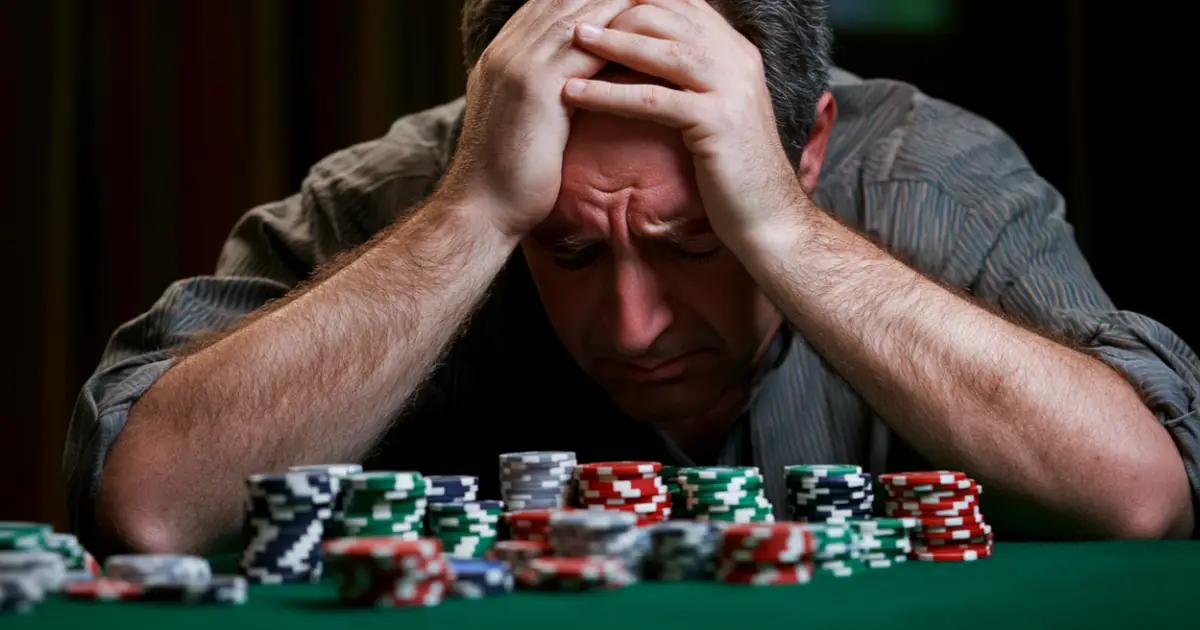
“I took out a huge number of loans, I borrowed money from unsavoury characters. In four days, I lost everything: my wife, my job, my passion, friends, family… I ended up sleeping in the woods for three nights.”
Beyond the financial and social losses, another factor makes the situation worse: the way others look at you.
“That’s precisely the big problem: how people look at you, the judgement, the threats,” explains Jean-Michel.
Jean-Michel Kowalski is one of those who managed to overcome his addiction. He highlights one key factor: support.
“I was lucky enough to have my stepson say exactly the right words to me.”
But not everyone has that opportunity. That’s why he decided to share his story, particularly through his book Garçon, l’addiction!.
“At first, it was meant to be an outlet for me. Then I realised that many people were unaware of the problem of gambling. This book has helped quite a few people, after helping me.”
The invisible spiral of addiction
Jean-Michel’s story is not an isolated one. Gambling addiction often sets in gradually, almost imperceptibly.
Mélanie Saeremans, a psychologist and head of the Gambling and Behavioural Addictions Clinic at Brugmann University Hospital, describes this process:
“At first, you’re curious; you’re tempted by an advert or a recommendation. Very quickly, there may be winnings, which generate excitement and make you want to do it again. Little by little, the cycle takes hold, losses mount up and the person develops a particular bond with gambling.”
Gambling activates the reward system. Visual, auditory and emotional stimuli trigger the release of dopamine, a chemical associated with pleasure.
“Intermittent rewards create very high dopamine spikes, which makes the game highly addictive,” explains Mélanie Saeremans.
In other words, the uncertainty of winning fuels the addiction even more than the win itself. The brain learns to seek out these sensations. Conversely, losses cause stress, leading to the release of cortisol. This imbalance drives the gambler to gamble again in order to recapture that pleasurable sensation.
A reality affecting the whole of society
Contrary to popular belief, gambling addiction does not affect a single type of person.
“Men, women, the wealthy and the disadvantaged, of all ages. It really affects everyone,” insists the psychologist.
However, one trend is of particular concern to professionals: the phenomenon is affecting younger people.
“Young people are much more impressionable, more impulsive, more susceptible to peer pressure, and have a need for immediate gratification. Many young people are exposed to it at a very early age, particularly on social media. They experiment, they try… and addiction can take hold.”
The data confirms the scale of the problem. As of 1 November 2025, 135,383 Belgians were on the gambling exclusion list. Added to this are nearly 59,000 people subject to a professional ban. In total, 194,108 individuals are affected.
Increasingly early intervention
At Brugmann University Hospital, support is based on a holistic approach.
“First, we assess the psychological and financial consequences. Then, we look at the role gambling plays in their lives. Many gamble to escape negative emotions or difficulties.”
The aim is then to replace this ‘crutch’ with other resources: managing emotions, setting life goals, and personal recovery.
“In the past, it took a gambler an average of eight years to seek help. Nowadays, people come forward more quickly.”
Gambling addiction can no longer be viewed as an individual problem. It raises questions about the place of gambling in our society, the regulation of advertising, and the protection of young people.