




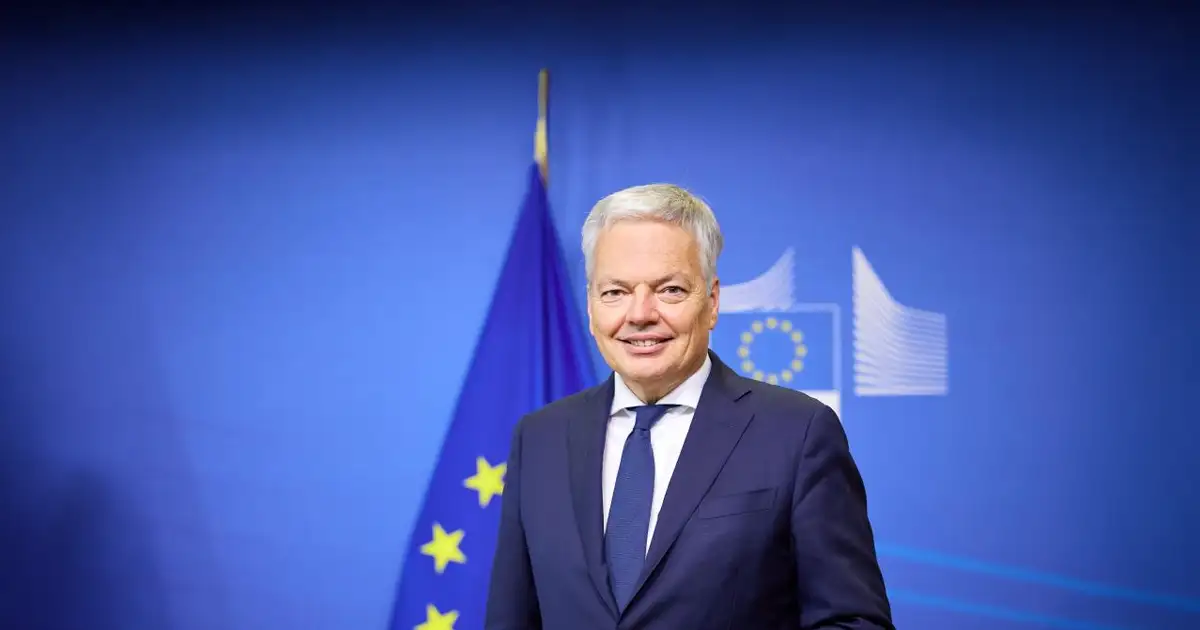
Reynders’ right-hand man in turmoil
 •
17 Feb 2026 •
Reading time: 4 minutes
•
17 Feb 2026 •
Reading time: 4 minutes
The judicial investigation into former European Commissioner Didier Reynders has taken a new turn. The Brussels courts now suspect two close associates, his right-hand man Jean-Claude Fontinoy and antique dealer Olivier Theunissen, of being involved in a possible money laundering scheme involving more than €1 million.
An investigation that is taking on a new dimension
The judicial investigation into Didier Reynders, former European Commissioner for Justice, has reached a new milestone. The case, which centers on suspicions of money laundering, now extends to two figures in his immediate circle: his loyal collaborator Jean-Claude Fontinoy and Brussels antique dealer Olivier Theunissen. According to information from the judicial investigation conducted in Brussels, magistrates suspect a sophisticated mechanism involving cash payments, art purchases, and repeated financial transactions over several years.
The story begins with financial behavior deemed atypical. For nearly a decade, Didier Reynders allegedly purchased National Lottery scratch cards almost every week, paying exclusively in cash. The total amount of these purchases is estimated at around €200,000. The winnings were then deposited into a bank account. For investigators specializing in financial crime, this practice could constitute a classic money laundering technique: transforming cash that is difficult to trace into officially declared income. But that’s not all. Between 2008 and 2018, more than €700,000 in additional funds were reportedly deposited into the same account. In total, the suspicious flows are estimated to exceed €1 million.
These movements attracted attention late in the day. The bank concerned only reported the suspicious transactions to the Financial Intelligence Processing Unit in 2023, even though the National Lottery had already filed a report the previous year.
The shadow of Jean-Claude Fontinoy
Jean-Claude Fontinoy is no stranger to Belgian political circles. An engineer by training who became an influential businessman, he has been described for decades as the facilitator or fixer of the Reynders network.
For eight years, he served as chairman of the board of directors of SNCB, a strategic position at the heart of public infrastructure. His name also appears in several cases related to the sale of public real estate or major urban projects, although he has never been convicted of any crime.
Today, investigators are interested in a very different role. According to a former driver quoted in the investigation, Fontinoy regularly visited the Sablon district, the heart of the Brussels art market, carrying large sums of cash. He would return laden with antiques: furniture, clocks, light fixtures. Fontinoy is now charged with criminal conspiracy and forgery. He denies any involvement and claims to lead a quiet life.
The investigations describe a pattern that is difficult to detect: cash injected into split purchases, then reintroduced into the financial system in the form of commercial transactions or officially recorded earnings. The use of art and antiques is not insignificant. This market has several characteristics that are prized by money launderers: subjective value, sometimes discreet transactions, international circulation of works, and complexity of valuation.
Investigators are now seeking to establish whether these operations were individual initiatives or part of a coordinated organization.
Olivier Theunissen, notable figure in the Sablon district
At the heart of the alleged scheme is Olivier Theunissen, a well-known figure in the world of antiques. Highly integrated into Brussels’ economic and cultural circles, he has served as a consular judge at the French-speaking commercial court and been actively involved in several prestigious institutions, including the Cercle Gaulois. Vice-president of the Royal Chamber of Antique Dealers of Belgium, he also sits on the board of directors of BRAFA, one of the country’s most important art fairs.
His business is said to have served as a base for Fontinoy’s repeated purchases. The courts suspect him of having taken part in a criminal association, a charge he strongly denies.
After a search of his gallery, he said he was stunned by the accusations, recalling his relationship of trust with Didier Reynders and highlighting the latter’s support for local initiatives to promote the historic Sablon district.
A long-standing relationship and honorary distinctions
The investigation also highlights the long-standing closeness between the protagonists. Olivier Theunissen had been honored twice by Didier Reynders: he was named Knight of the Order of the Crown in 2012, then Knight of the Order of Leopold in 2018.
These distinctions, usually awarded for services rendered to the nation, are now being re-examined by investigators from a new angle. No legal conclusions have yet been drawn, but these elements are fueling questions about the nature of the links between politicians, economic intermediaries, and the art market.
An investigation still far from complete
The Brussels Public Prosecutor’s Office is continuing its meticulous analysis, scrutinizing financial flows, witness statements, invoices, inventories of objects, and correspondence.
The aim is to determine whether the evidence gathered constitutes sufficient evidence of an organized money laundering scheme or whether it is the result of misinterpretations of private practices.