





70,000 self-excluded gamblers: the success of the EPIS system against addiction
 •
16 Feb 2026 •
Reading time: 3 minutes
•
16 Feb 2026 •
Reading time: 3 minutes
Belgian gamblers are saying no to gambling addiction, with no fewer than 70,000 of them voluntarily registering on the EPIS list.
Every month, the Gaming Commission publishes updated statistics from the EPIS (Excluded Persons Information System) list. It is clear that Belgian gamblers have understood that the system is there to help them, and more and more of them are registering each month.
EPIS: Belgium’s bulwark against gambling addiction reaches a milestone
According to the latest consolidated data for February 2026, the EPIS protection tool is now the central pillar of responsible gambling policy. The list reached a new record with 70,349 Belgian citizens registered on a voluntary basis. With 35.8% of all registrations, voluntary registration is now the main reason for inclusion on the notorious blacklist.
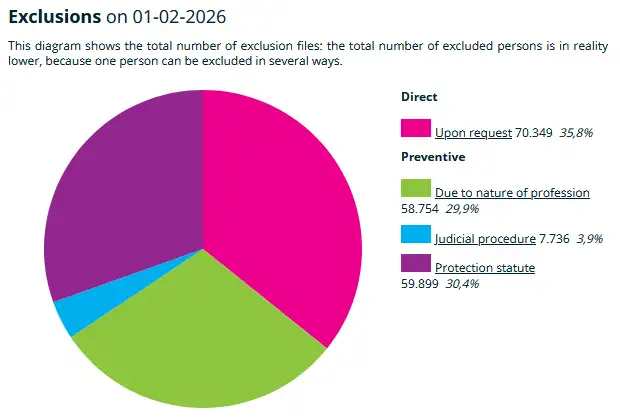
In addition to self-exclusions, the system contains almost 200,000 files if we include automatic bans linked to profession or financial solvency.
Simplifying the procedure with Itsme
The success of self-exclusions can be explained by the simplification of procedures. The integration of the itsme application as the authentication standard has removed the administrative barriers that once discouraged players seeking protection.
A simple secure connection can now activate an immediate digital shield, prohibiting access to physical casinos, gambling dens (class II) and online gaming platforms operating legally in the country.
Multi-faceted protection: more than voluntary
While self-exclusion is the focus of attention, the EPIS ecosystem is based on a much wider range of criteria. The system also acts preventively for specific categories of the population.
| Reason for exclusion | Number of cases | Percentage share |
| Voluntary application (Direct) | 70 349 | 35,8 % |
| Collective debt settlement | 59 899 | 30,4 % |
| Prohibition linked to profession | 58 754 | 29,9 % |
| Legal proceedings | 7 736 | 3,9 % |
According to information published on the GC website, nearly 60,000 Belgians are currently banned from gambling as a result of a collective debt settlement. This automation ensures that individuals in financial difficulty cannot add to their liabilities in gambling establishments.
Nearly 30% of registrants do so in the name of professional ethics, a category that includes magistrates, notaries and members of the police force.
The imminent extension to bookshops: a new technical challenge
EPIS is not just about casinos and gaming halls. A major structural change is planned for 1 May 2026.
On that date, bookshops (holders of class F2 licences) will have to integrate EPIS control for every bettor. This measure has been put in place to fill what regulators used to call ‘the grey zone’, where anonymity still allowed excluded players to place sports bets.
Operators of in-store betting terminals are currently finalising the migration of their communication protocols, abandoning the old SOAP services for the REST version, judged to be more robust and faster for handling requests in real time.
This technical transition is crucial, as it must ensure that identity checks do not become an obstacle to local commerce, while guaranteeing that the system is totally watertight.
The effectiveness of the Belgian model in tackling the illegal market
The explosion in the number of registrants on EPIS has reopened the debate on the channelling of gambling. While the increase in self-exclusions testifies to the maturity of players, operators’ associations such as BAGO are concerned about the potential migration of the most vulnerable players to illegal sites.
These illegal platforms, often based in Curaçao or Malta, simply ignore the EPIS list and the weekly deposit limits imposed in Belgium. Self-excluded players are not protected and could easily plunge into addiction.