




A fake Netflix platform traps Internet users
 •
17 Feb 2026 •
Reading time: 3 minutes
•
17 Feb 2026 •
Reading time: 3 minutes
A new wave of fraudulent online adverts is using the image of Netflix to promote illegal gambling offers presented as legitimate. This phenomenon, reported by the KVA, illustrates the evolution of covert marketing strategies.
A new form of digital fraud that plays on trust
The Netflix name is being fraudulently used to promote unauthorised gambling offers, presented under the misleading name of Netflix Casino. According to observations published by Keurmerk Verantwoorde Affiliates (KVA), these campaigns represent a new milestone in the evolution of an underground ecosystem that is constantly adapting its methods to gain credibility with the general public.
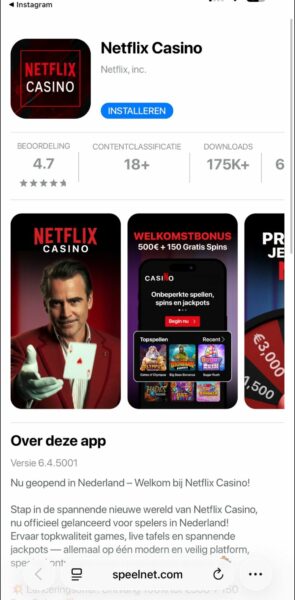
The reported advertisements are presented as classic ads, written entirely in Dutch and carefully adapted to the national context. They claim that a platform called Netflix Casino is newly available in the Netherlands, putting forward arguments of security and reliability. This language is not insignificant. It reproduces the usual marketing codes of official launches: promise of innovation, local accessibility, secure experience.
Behind this façade, however, it is in no way a service linked to the famous broadcasting platform. The aim is to attract Internet users to illegal offers by exploiting their trust in a globally recognised brand.
A common strategy
Observers had already documented cases of fraudulent ads taking on the appearance of news media or discouraging the use of authorised operators. But the use of a popular entertainment brand marks a new stage. Where once campaigns targeted specific groups, they now seek to appeal to a much wider audience.
Why hijack a well-known brand rather than create a fictitious identity? Because trust is now the most valuable currency in online commerce. Consumers don’t have the impression of entering an unknown universe, but simply of exploring a new feature of a service they already use.
An increasingly blurred line between legal and illegal
The main danger lies in the growing confusion between authorised and fraudulent offers. As campaigns become more sophisticated, it becomes more difficult, even for an informed user, to distinguish the genuine from the illegitimate. We are thus witnessing the professionalisation of illegal marketing, which adopts the same techniques as official campaigns: broad targeting, storytelling, localisation of the message.
Reporting highlights another essential aspect: the remarkable flexibility of this parallel market. Illegal players quickly adjust their methods to reach the widest possible audience. When the use of fake press articles becomes less effective, they turn to entertainment brands. When overly aggressive messages arouse suspicion, they opt for a reassuring, institutional approach. When the authorities tighten controls on certain channels, they migrate to other advertising spaces.
Faced with these developments, caution is no longer a simple recommendation. It has become a necessary skill for navigating a digital space where the appearance of legitimacy can be fabricated.