




The mystery of untaxed bingos in Brussels resurfaces
 •
18 Feb 2026 •
Reading time: 5 minutes
•
18 Feb 2026 •
Reading time: 5 minutes
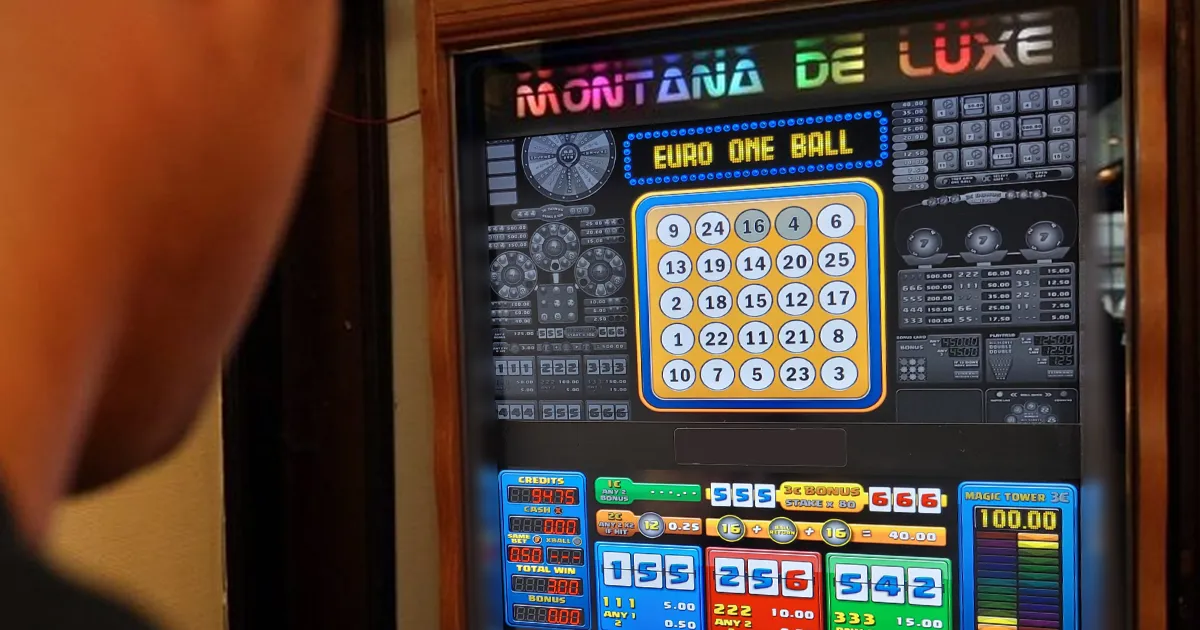
In Brussels, a dispute has been raging for several years between gambling operators over a regional tax applied to bingo machines. Recently rekindled by a court ruling, the case highlights suspicions of non-payment, controls deemed insufficient and a loss of revenue estimated at several million euros for public finances.
A dramatic investigation
The story does not begin in a court of law, but on the ground. In the spring of 2023, a private detective was commissioned to scour the capital’s cafés. His mission: to discreetly observe the bingo machines installed and check their tax compliance.
The initiative was prompted by a number of industry professionals grouped under the umbrella of the ASBL Uba-Bngo (Professional Association of Gambling Manufacturers, Distributors and Operators). They suspect that a competitor is circumventing the compulsory regional tax on automatic amusement machines. Two investigation reports show machines without a valid tax sticker, which is essential to prove that the tax has been paid.
In 2023, of the 22 machines considered irregular, eight were linked to the company in question. One year later, the findings remain the same: 22 machines still pose a problem, fourteen of which are attributed to the same operator. For the complainants, these figures illustrate a structural situation.
A tax at the heart of the sector’s economic equilibrium
The legal framework imposes a number of strict obligations. Gaming agents and operators must hold a licence issued by the Gaming Commission and pay an annual regional tax for each machine installed. At 1 January 2025, this tax amounted to €6,103.10 per machine. It represents a significant budgetary resource: around €10 million in annual revenue for the Brussels-Capital Region. Once the tax has been paid, an official sticker is affixed to the machine. This distinguishes between legal and illegal machines.
For operators who comply with the regulations, the alleged fraud creates a major distortion.
‘My clients pay up to 600,000 euros in tax for these stickers every year,’ explains the plaintiffs’ lawyer, Antoine Chomé.
According to him, evading the tax would enable cafe owners to offer more advantageous commercial terms and thus capture strategic locations.
Insufficient controls and a complex administrative system
Behind the commercial dispute lies a wider institutional difficulty. In Brussels, the collection of this tax is based on a hybrid mechanism. It comes under regional jurisdiction, but is collected by the federal administration, in this case the Federal Public Service Finance, which then passes the amounts on to the Region.
This sharing of roles complicates controls. From 2020 onwards, exchanges between administrations pointed to inadequate monitoring and an increase in the number of companies suspected of not complying with the legislation. The regional authorities were therefore concerned about a drop in revenue and a system that was difficult to enforce on the ground.
The legal battle begins
Following the investigation, several operators decided to take legal action in June 2024 before the French-speaking company court in Brussels. They demanded that the company in question be forced to produce internal documents detailing its activities and accounts, in order to verify the actual payment of taxes. They are also calling for the disputed machines to cease operating, claiming that they are suffering unfair competition.
At first instance, however, their request was rejected. This decision could have put an end to the case. All it did was delay a new development.
On 5 February, the Brussels Court of Appeal handed down an interlocutory ruling that changed the dynamics of the dispute. Without making a final decision on the merits, the judges ruled that there were serious and specific indications of possible non-payment of tax.
They ordered the company concerned to provide an anonymised statement of the number of machines installed in Brussels’ catering establishments. The Belgian State, for its part, must provide a list of the machines declared and a statement of the amounts paid for the years 2023, 2024 and 2025. For the court, the argument of business secrecy is not sufficient to refuse these communications. The company must cooperate in establishing the evidence.
‘If the operator were in good standing, it would have provided direct proof of payment of its taxes before the hearing,’ argues Antoine Chomé, who is convinced that the documents will confirm his customers’ suspicions.
However, the court did not follow all the requests: no financial penalty was imposed at this stage, and the operation of the machines was not suspended.
The defence denies any fraud
The target company has rejected the accusations since the beginning of the procedure. It merely acknowledges possible administrative delays, which have since been rectified. It describes the legal action as an attempt orchestrated by competitors seeking to obtain sensitive commercial information.
The judges were not convinced by this argument, nor did they rely on the cross-accusations between operators. Their decision remained cautious: the judgment is said to be interlocutory, i.e. provisional. It imposes investigative measures without prejudging the final verdict.
The judicial timetable now provides for the transmission of the required documents, a decisive stage in determining whether there has been a tax breach.
For the public authorities, the stakes are higher than just a commercial dispute. The tax on vending machines is a stable source of revenue for the Brussels Region. Any tax evasion undermines not only this resource, but also the credibility of the control system. A protocol is currently being drawn up to improve communication between the various levels of authority and strengthen the identification of untaxed machines. The tax authorities say they have made their officials aware of this issue in their control directives.
The case is far from over. If unfair competition is confirmed, some operators are already planning to take legal action to compensate for the losses they have suffered.