




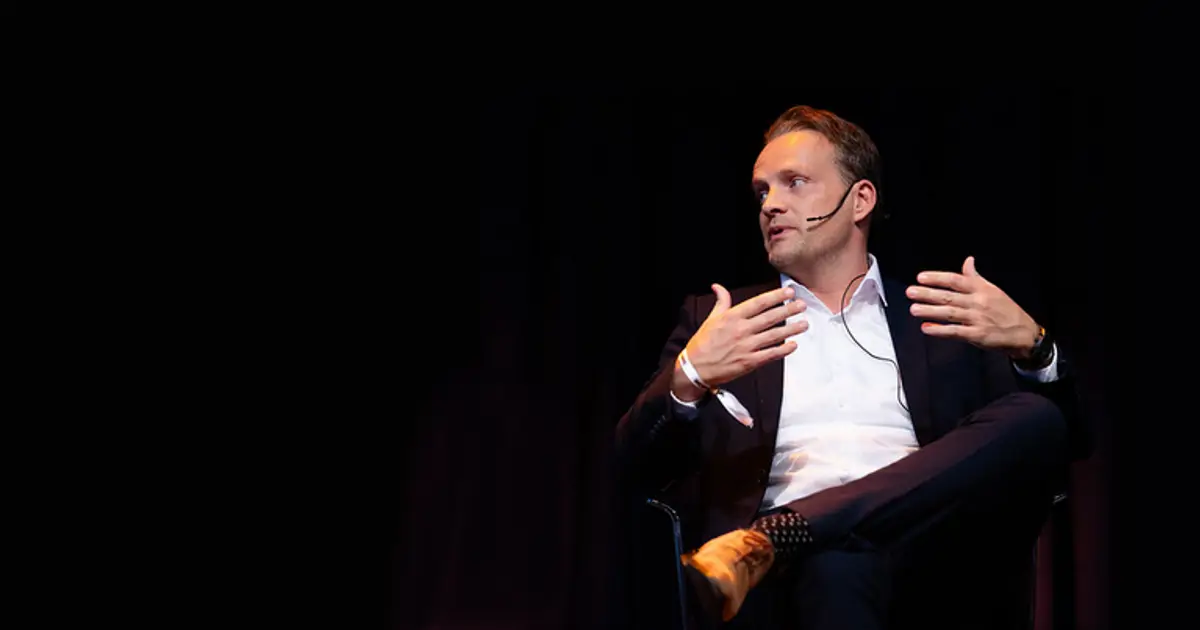
“Illegal operators remain visible”: Steven Vrolijk warns of weak enforcement in Belgium
 •
7 Apr 2026 •
Reading time: 3 minutes
•
7 Apr 2026 •
Reading time: 3 minutes
The Belgian gambling market is under pressure, whilst illegal operators remain visible. Steven Vrolijk, head of the Responsible Affiliates quality mark and active in the Netherlands, sees opportunities, but also clear pain points.
In conversation with Gambling Club, he reveals where the friction lies and where things could be improved.
Belgium starts from a completely different position to the Netherlands
“In the Netherlands, we went live the moment the market opened,” says Vrolijk. “Belgium has been regulated for years. That makes it harder to break into the market.”
He points out a key difference. “The affiliate sector has been under pressure here, certainly following the advertising ban. That makes it harder to make an immediate impact.”
Yet he sees opportunities precisely in that mature market. “There is a need for structure and transparency. That offers opportunities for a quality mark such as QMRA.”
Strict rules also create blind spots
Belgium is known as a strict gambling jurisdiction. Vrolijk has noticed this too. “Take the display of bonuses, for example. That is not permitted outside of licence holders.”
In his view, this is counterproductive. “If reliable affiliate websites are not allowed to provide clear information, players will look for that information elsewhere. And those are often less reliable sources.”
He advocates for a regulated space. “SEO-driven sites are only found by people who are actively searching. That is precisely where the value lies.”
Illegal providers remain visible, and that is a problem
The reality is harsh. Illegal operators continue to reach players. “QMRA can help make the difference clearer,” says Vrolijk.
He explains how. “Our members display a recognisable logo alongside a profile page. There you can see recent compliance checks.”
In addition, the organisation focuses on visible expertise. “We link legal interpretation to real names and faces. That aligns with how search engines work.”
Belgium recognises affiliates, and that is striking
On paper, Belgium is doing something few countries do. “The Gaming Commission explicitly recognises affiliate SEO as useful,” says Vrolijk.
He calls this exceptional. “In many countries, affiliates are permitted, but rarely so clearly identified as part of the system.”
According to him, this is a strong point. “It shows that well-designed websites contribute to consumer protection.”
The real challenge lies in enforcement
Yet not everything is rosy. “The biggest challenge is enforcement,” Vrolijk states bluntly.
He observes that illegal operators remain active. “That requires more capacity. A larger budget for the Gaming Commission would help.”
Self-regulation can make the difference
QMRA wants to play a role in this. “We add a layer of self-regulation,” he explains.
“Affiliated parties actively demonstrate that they are compliant. They participate in audits and invest in them.”
He believes this helps regulators. “It makes it easier to distinguish between operators who want to do the right thing and those who do not.”
Cooperation with regulators is crucial
Vrolijk is keen to emphasise the importance of cooperation. “We would very much like to engage in dialogue with the Belgian Gaming Commission.”
He sees opportunities. “By sharing intelligence more quickly, you can take more effective action against illegal networks.”
Google plays a key role in the problem
Enforcement alone is not enough, he emphasises. “Illegal operators have large budgets and continue to adapt.”
The solution lies partly with tech companies. “Platforms such as Google must play a more active role. Illegal operators must become less visible in search results.”
Human oversight remains paramount in compliance
It is striking that QMRA does not rely entirely on technology. “We carry out checks manually,” says Vrolijk.
He explains why. “The rules are complex and the risks are high. That’s when you want human judgement.”
QMRA aims to become an integral part of the Belgian market
He has a clear goal for the coming years. “We want to establish a firm foothold in Belgium.”
That means growth. “More affiliated partners, a recognisable label for consumers and, ideally, a partnership with the Gaming Commission.”
He sees it as a logical step. “In this way, we contribute to the further professionalisation of the market.”