




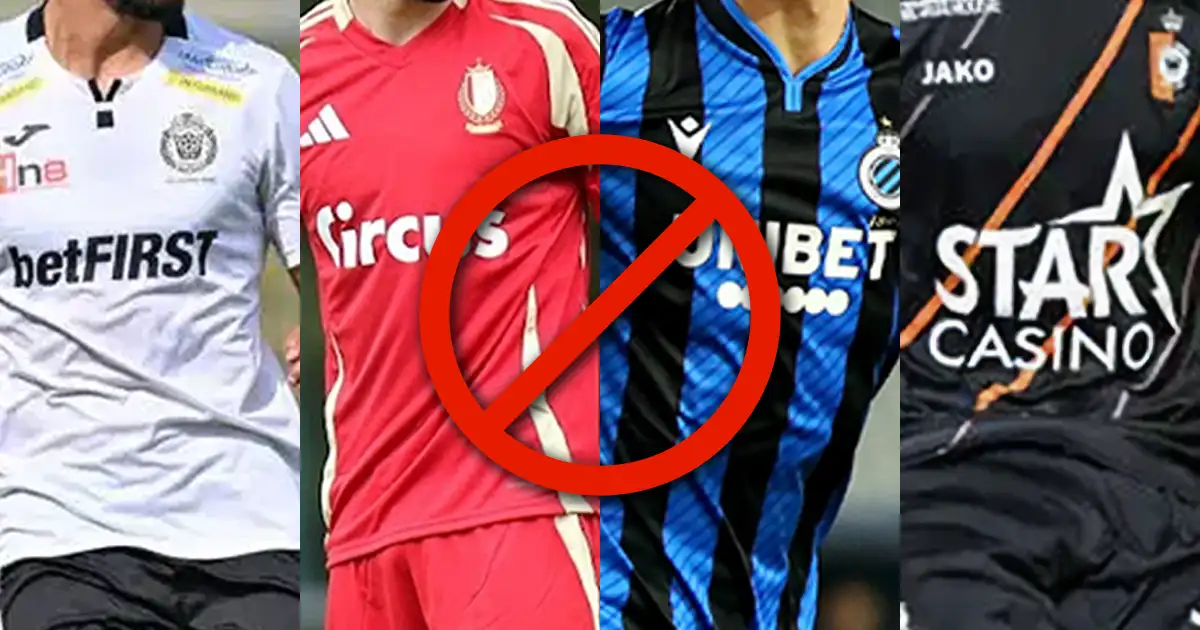
Belgian gambling companies catch Gaming Commission offside – taking over amateur club advertising
 •
16 Jan 2026 •
Reading time: 2 minutes
•
16 Jan 2026 •
Reading time: 2 minutes
Gambling companies are disappearing from Belgian professional football but are gaining ground in the amateur leagues.
Clubs in the highest amateur divisions are increasingly wearing a gambling logo on their shirts. And in doing so, they are proverbially putting the Gaming Commission offside.
The Gaming Commission is concerned, but the law allows it. Advertising for gambling companies is prohibited at the professional level but not at the amateur level.
Amateur clubs fill the gap left by professional football
From 2028, gambling sponsors will be banned in Belgian professional football. That seems to hardly bother the gambling sector. It simply shifts to the next level: the amateurs. There, the rules are still looser, and the need for revenue is greater.
According to figures from Belgian amateur clubs, almost half of the clubs in the top two amateur leagues now have a deal with a gambling company. That raises questions, especially because young players and supporters come into contact with the gambling industry daily in this way.
The law prohibits logos of gambling companies on the front of shirts, but companies and clubs find ways to bypass those rules. They adjust the name slightly so that it seems unrecognizable, but still refers to the gambling site.
‘If Club Brugge does it, why shouldn’t we?’
Sports marketer Geert Smets understands that amateur clubs don’t say no.
“For those clubs, it is a no-brainer. If Club Brugge works with a gambling sponsor, the little ones don’t want to be holier than the pope.”
For companies like Betsson Group, it is a logical step. Timothy Mastelinck, commercial director, says his company now sponsors 22 amateur clubs. According to him, the clubs ask for it themselves. The money is welcome, and betting on amateur matches is not possible, he states.
But that nuance changes nothing about the visibility. Logos appear on sleeves, boarding, and social media. As a result, gambling remains interwoven with football.
Gambling seems innocent, but the consequences are significant
Arne Nilis knows the other side of the story. As the founder of Beyond the Bet, he speaks from experience. He warns against the normalization of gambling, especially among young people. It seems innocent but often leads to addiction and personal harm.
Nilis points to worrying figures. A quarter of young people between 12 and 18 years old have gambled at some point. In amateur clubs, the risk of problematic gambling behavior is nine times higher. He pleads for mandatory education within every club.
Clubs know there is tension but feel stuck. As long as the law allows gambling sponsorship in amateur football, they will continue to participate. And so the problem shifts, from the pros to the rest.