





“This feels like spam terror”: how illegal casinos lure Belgian players via email
 •
27 Mar 2026 •
Reading time: 2 minutes
•
27 Mar 2026 •
Reading time: 2 minutes
You open your inbox and there it is again. A garish email full of promises of free spins and massive bonuses. Whilst legal gambling advertising is being cracked down on more and more strictly, this flood seems to be increasing. Frustration is growing and the impact is significant.
Illegal emails continue to pour in undisturbed
The debate on gambling advertising often focuses on legal operators. They are facing ever-increasing restrictions: reduced visibility, stricter rules and less aggressive campaigns. Yet many people find that their inbox tells a different story.
Every day, emails from unknown online casinos pop up there. They operate without a clear licence from the Gaming Commission and pay little heed to the rules. The result is a proliferation of messages that seems difficult to stop.
Gransino Casino lures players with extreme bonuses
A striking example is Gransino Casino. This platform actively targets Belgian players via email campaigns. The incentives are substantial: bonuses ranging from 100 to as much as 500 per cent and up to 200 free spins.
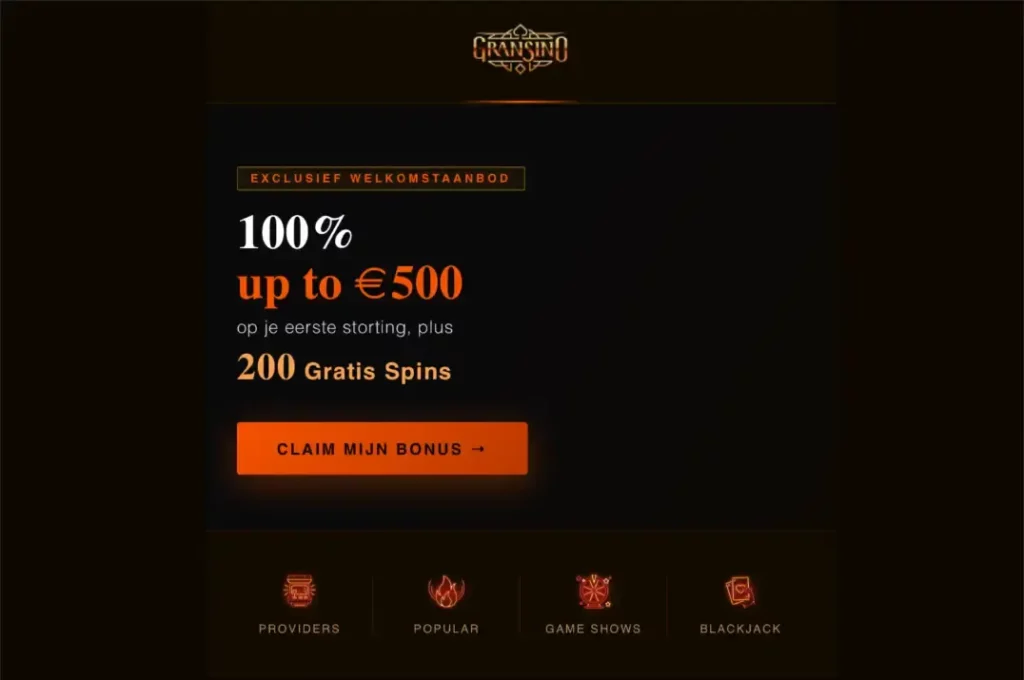
The message sounds appealing and direct. Players are encouraged to sign up straight away and take advantage of promotions, challenges and rewards. The language used is clear: it’s all about quick wins and non-stop action.
But behind those promises lies a risk. These operators operate outside the scrutiny of regulators and offer no guarantees of fair or safe gaming conditions.
Why this spam stands out right now
The timing is no coincidence. Now that legal casinos are less visible, a gap has opened up. Illegal operators are eagerly capitalising on this. They seek direct contact via email, without filters or restrictions.
For players, the difference is not always immediately clear. A professional-looking email may appear trustworthy, when in fact it is not. This increases the danger, particularly for people who are susceptible to quick promises.
Email gambling spam is becoming a wider problem
What starts as a single email quickly turns into a constant stream. Many recipients now refer to it as “email gambling spam”. Unsubscribing often doesn’t help, and new senders keep popping up.
This problem goes beyond mere irritation. It undermines gambling advertising policies and exposes players to unregulated platforms. As a result, the battle against gambling advertising is not only being fought on TV or social media, but increasingly in the inbox.