




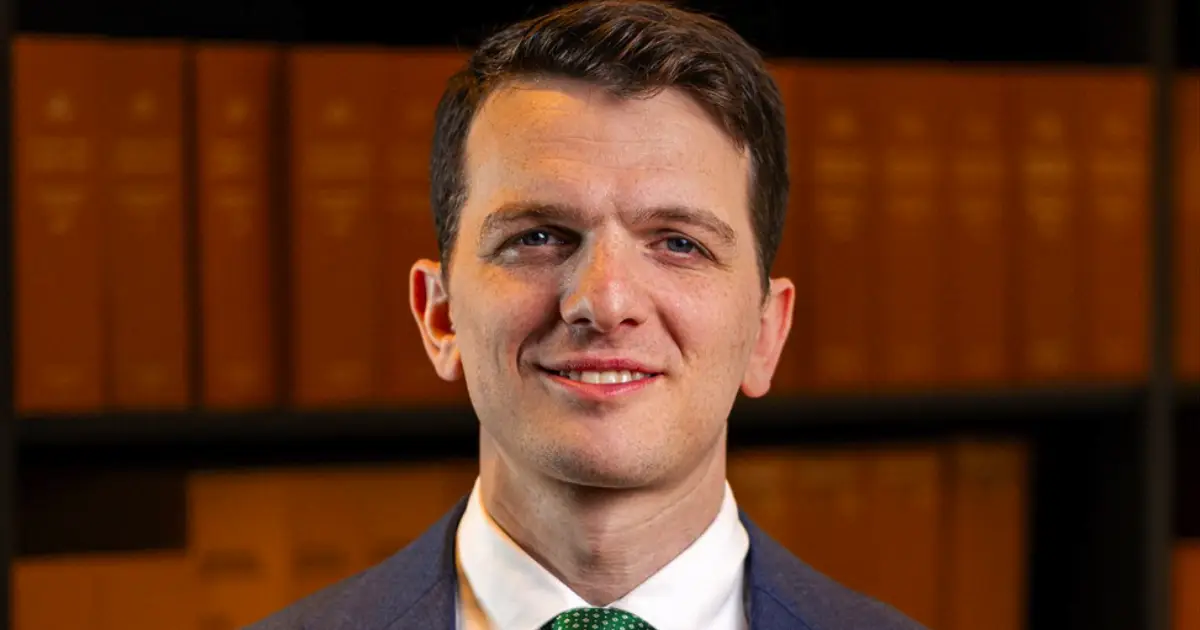
Interview: Benzi Loonstein fights for aggrieved gamblers
 •
4 May 2026 •
Reading time: 5 minutes
•
4 May 2026 •
Reading time: 5 minutes
“This is about fairness and duty of care”
In this in-depth interview with GamblingClub, solicitor Benzi Loonstein speaks openly about his fight for players who lost large sums of money at online casinos.
Since the legalisation of online gambling in the Netherlands, a growing group of players has begun seeking to recover losses they incurred with operators who were operating illegally at the time.
Well-known names such as Unibet are consequently regularly faced with legal action. Loonstein represents these players and has successfully recovered funds in several cases.
Can you tell us a bit about your background and how you came to be involved in these cases?
“We often assist people who are up against the government, banks or large corporations. Those kinds of ‘David versus Goliath’ cases form a significant part of our work.”
“My involvement in gambling cases actually began by chance. A few years ago, someone contacted me who had lost a huge amount of money at an online casino. That person felt this should not have happened. It was about duty of care – and that immediately appealed to me.”
“From that moment on, more cases of this kind came in and it developed into a key area of specialism within my practice.”
What makes these cases so interesting from a legal perspective?
“During my investigation into the gambling market, I discovered something fundamental: at the time, many of these casinos did not have a licence to operate in the Netherlands at all.”
“In the Netherlands, the rule is that if you offer games of chance without a licence, you are acting in breach of the law. That makes such situations very interesting from a legal perspective.”
“That is therefore a key focus of our work. But we don’t just look at the past. We also investigate legal operators, for example, to see if they comply with rules regarding player protection.”
You also receive enquiries from other countries. Why have you chosen to focus on the Netherlands?
“I am indeed approached by clients from countries such as Belgium and Denmark. But legislation and duty of care differ from country to country.”
“I want to help my clients effectively, and that’s only possible if you know the rules inside out. That’s why I focus on the Netherlands.”
“I do, however, have contact with lawyers in Belgium, Germany and Austria, where similar issues arise.”
How do you view the situation in Belgium?
“In my view, there are currently fewer legal disputes in Belgium.”
“The market there is more regulated, but the wave of claims seen in the Netherlands has not materialised.”
“That doesn’t mean there are no problems, but they are less visible.”
Duty of care is a key concept in these cases. What exactly does that entail?
“The duty of care means that casinos are responsible for protecting players from problematic behaviour, such as excessive gambling or heavy losses.”
“I often compare it to everyday life: in a supermarket, you can expect products to be safe. At a casino, you can expect it to follow the rules.”
“However, the stakes here are often much higher, because money is involved.”
How do you view the approach to illegal casinos internationally?
“It is often said that countries cooperate, but in practice this hardly ever happens.”
“That is a shame, because these operators specifically operate across borders. Without cooperation, it remains difficult to take effective action.”
When is an agreement between a player and a casino legally invalid?
“If something contravenes the law or public order, then in principle it is invalid.”
“So if a casino is operating without a licence, you could argue that the agreement is not legally valid.”
“But the legal position has not yet been fully clarified. The Advocate General recently indicated that the matter is more complex. The Supreme Court’s ruling is expected shortly and could have major consequences.”
Why do we mainly hear from losers rather than winners?
“People who win naturally have no reason to initiate legal proceedings.”
“Whether that situation should be assessed in the same way legally is an interesting question.”
“In principle, winnings should simply be taxed. But there are differences, for example regarding the statute of limitations and who needs to take action and when.”
Are there any examples from other countries?
“A striking ruling was handed down in Austria: there, a judge ruled that players at illegal casinos are not entitled to anything, not even their winnings.”
“I think that’s a pragmatic and, in fact, strong approach. It discourages people from playing at such establishments in the first place.”
What about criminal law aspects?
“If someone uses money that isn’t theirs, for example by stealing to gamble, then that falls under criminal law.”
“A judge cannot simply ignore that, even if addiction is involved.”
Isn’t there a risk that people will start gambling again?
“I understand that concern, but in practice I see something different.”
“I work with support organisations and remain involved. What you often see is that, after such an experience, people actually no longer want to gamble. They have learnt from it.”
You are critical of the sector and the regulators. Why?
“Some casinos, such as Unibet, do not always proceed with refunds despite court rulings. That is reprehensible.”
“But what I find perhaps even more worrying is that the government isn’t doing enough to tackle this.”
“If we want a fair and clean market, offenders really need to be dealt with. For example, if they ignore court rulings. At the moment, that’s still happening far too rarely.
Benzi Loonstein’s fight is about more than just getting money back. It is about fairness, accountability and protecting players.
With important legal rulings on the horizon — including one from the Supreme Court — the coming period could prove crucial for the future of the Dutch gambling market.