




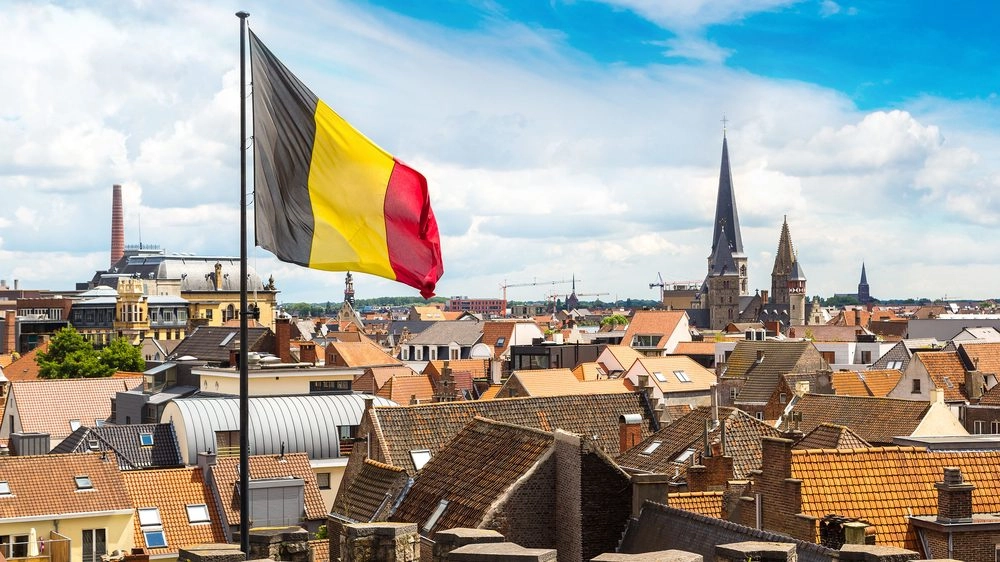
Belgium under pressure: illegal online gambling costs EU countries €22.9 billion
 •
9 Jul 2026 •
Reading time: 7 minutes
•
9 Jul 2026 •
Reading time: 7 minutes
Like other European countries, Belgium is increasingly having to deal with the consequences of illegal online gambling. New figures show that the illegal gambling market in the European Union accounted for a gross gaming yield of €91.6 billion in 2025. As a result, the 27 Member States are estimated to have lost out on €22.9 billion in tax revenue.
These figures are particularly relevant for Belgium. Data from H2 Gambling Capital previously revealed that only 62 per cent of Belgian online gambling expenditure goes to licensed operators. At the same time, the illegal market in Europe is growing rapidly, and thousands of unlicensed foreign gambling sites are able to reach Belgian players.
Belgium retains only 62% of the online gambling market within the licensed sector
Belgium has a strictly regulated gambling market. Online casinos and bookmakers must hold a licence from the Gaming Commission and comply with rules on advertising, player protection and responsible gambling.
Nevertheless, Belgium is becoming increasingly less successful at keeping players within that regulated market. According to figures from H2 Gambling Capital, approximately 62% of Belgian online gambling expenditure remains within the licensed market.
This means that a significant proportion of gambling revenue ends up with foreign operators without a Belgian licence.
This development makes the new European figures particularly relevant for Belgium. As the illegal market grows, it becomes more difficult for national regulators to protect players and keep track of the flow of funds disappearing to foreign gambling companies.
Illegal European gambling market grows to €91.6 billion
The new figures come from an annual study by Gambling Compliance International, commissioned by the European Casino Association (ECA).
According to the study, the illegal online gambling market in the European Union accounted for a gross gaming yield of €91.6 billion in 2025.
That is approximately 14 per cent more than the previous year.
The researchers also state that unlicensed operators are now responsible for the lion’s share of online gambling turnover across the 27 Member States of the European Union.
The scale of the illegal market is also growing. More than 6,200 illegal operators are said to be actively targeting European players.
Belgian consumers can also easily access such websites. Foreign gambling sites use search engines, social media, influencers, affiliate websites and online advertisements to reach players.
Many of these operators are based in countries outside the European Union and are therefore beyond the direct supervision of Belgian and European authorities.
EU countries are losing €22.9 billion in tax revenue
The growth of the illegal gambling market has major financial consequences.
According to the ECA, EU Member States collectively lost an estimated €22.9 billion in tax revenue in 2025.
Money wagered with licensed operators generates tax revenue and indirectly contributes to the funding of supervision and measures relating to responsible gambling.
With illegal operators, a large proportion of that revenue disappears outside the regulated system.
The report does not specify exactly how much tax revenue Belgium is missing out on. However, combining the European figures with Belgium’s channelling rate of 62% shows that Belgium also has an economic interest in reducing the illegal supply.
Thousands of illegal gambling sites target European players
According to the ECA, the scale on which illegal operators operate is one of the biggest problems.
More than 6,200 unlicensed operators are reportedly actively attempting to reach European consumers.
Furthermore, illegal operators do not stop at national borders. A single online casino can serve players from dozens of countries from a jurisdiction outside Europe.
This poses a challenge for Belgium. The Gaming Commission can blacklist websites and ask internet service providers to block access to illegal gambling sites. However, operators can relatively easily register new domain names or return via alternative websites.
Payment methods and cryptocurrencies also make it possible to circumvent financial restrictions.
The result is an ongoing battle between regulators and operators who can quickly relocate their activities.
Illegal gambling adverts also reach Belgian players
The research also highlights the scale of advertising for illegal gambling sites.
According to the researchers, the majority of online gambling adverts seen by European consumers originate from operators without a local licence.
This is striking because several European countries, including Belgium, have significantly tightened advertising regulations for licensed gambling operators in recent years.
Legal operators must comply with restrictions on sponsorship, bonuses and online marketing. Illegal providers pay little heed to these rules.
This creates an uneven playing field.
Whilst Belgian licence holders have fewer opportunities to reach new players, foreign providers can continue to advertise via international websites and social media platforms.
European cooperation is becoming increasingly important for Belgium
The new figures were presented during a round-table discussion at the European Parliament.
Those present included representatives from the European Commission, the Anti-Money Laundering Authority (AMLA), Eurojust, Europol, national gambling regulators and representatives of the gambling sector.
The meeting discussed the growth of illegal online gambling and ways to improve European cooperation.
Such cooperation is important for Belgium. Many illegal operators base their operations abroad, meaning that national measures alone are insufficient.
A gambling site blocked in Belgium may remain active at the same time in the Netherlands, France, Germany or other European markets.
By sharing information more quickly on illegal operators, payment flows and the companies involved, European authorities hope to be able to take more effective action.
ECA calls for a greater role for Europol
The publication of the figures comes shortly after the European Commission submitted a proposal to extend Europol’s mandate.
According to the ECA, the European police agency could play a greater role in combating cross-border crime linked to illegal online gambling.
ECA President Erwin van Lambaart warns that the scale of the problem is growing rapidly.
“The data from the GCI report for 2025 leaves no room for doubt: illegal online gambling is a rapidly growing, cross-border problem that exposes players – particularly young adults – to significant risks, deprives societies of much-needed tax revenue and undermines confidence in the regulated market.”
According to Van Lambaart, licensed casinos and online operators invest heavily in responsible gambling and anti-money laundering measures. Illegal operators, by contrast, can reach European consumers without comparable controls or obligations.
Belgian players face greater risks outside the licensed market
The growth of illegal gambling is not just a financial problem.
Players who gamble with a Belgian licence holder can benefit from various protective measures. For example, age and identity checks are in place, and there are procedures for complaints and disputes.
Players can also be excluded from participating in games of chance via EPIS.
With foreign providers without a Belgian licence, these safeguards do not exist.
When an illegal casino refuses to pay out winnings or blocks a player’s account, a Belgian consumer often has few options for getting their money back.
Furthermore, illegal operators may offer higher deposit limits, aggressive bonuses and products that are not permitted within the regulated Belgian market.
Stricter rules alone will not solve Belgium’s problem
The European figures also put the debate about the attractiveness of the legal offering back on the agenda.
In recent years, Belgium has taken various measures to better protect players. At the same time, the channelling rate of 62 per cent shows that a significant proportion of the online gambling market remains outside the regulated sector.
When the differences between legal and illegal providers become too great, there is a risk that players will turn to alternative options.
This does not mean that player protection rules should be abolished. However, the growth of the illegal market does demonstrate that regulation is only effective when players actually remain within the licensed market.
A safe market that fails to reach a large proportion of players loses a significant part of its protective effect.
Belgium faces a European challenge that cannot be resolved at national level
With an illegal online gambling market worth €91.6 billion and an estimated €22.9 billion in lost tax revenue, illegal gambling has become a major European problem.
For Belgium, there is an additional challenge. The country is attempting to protect players with strict regulations, whilst unlicensed foreign operators remain easily accessible.
Figures from H2 Gambling Capital, which show that only 62 per cent of Belgian online gambling expenditure remains within the regulated market, highlight this vulnerability.
The fight against illegal gambling will therefore not be waged solely in Brussels by the Gaming Commission. European cooperation, tackling payment flows, stricter enforcement against advertising and a greater role for organisations such as Europol are becoming increasingly important.
As long as thousands of illegal operators can reach European and Belgian players with just a few clicks of a mouse, the question remains as to how effective national restrictions are without a coordinated European approach.