


BAGO: the incredible evolution of gambling in Belgium
 •
1 Sep 2026 •
Reading time: 6 minutes
•
1 Sep 2026 •
Reading time: 6 minutes
From the first lotteries organised in Flanders in the 16th century to online gambling, the Belgian sector has undergone a profound transformation, as BAGO explains. Following periods of prohibition and tolerance, Belgium has developed a policy aimed at directing players towards a legal and regulated offering.
Belgium and gambling: a history stretching back several centuries
Long before the internet, modern licensing and prevention policies, gambling already had a place in society.
Belgium holds a special place in this history. According to BAGO, the country hosted the first lotteries and is also home to the world’s oldest casino still in operation.
As early as the 16th century, lotteries were organised in Flanders. They were not solely for entertainment: their proceeds benefited churches and guilds, amongst others. Their status was, however, to change. These lotteries were subsequently banned before becoming the exclusive prerogative of local authorities.
Spa becomes an iconic destination for European gambling
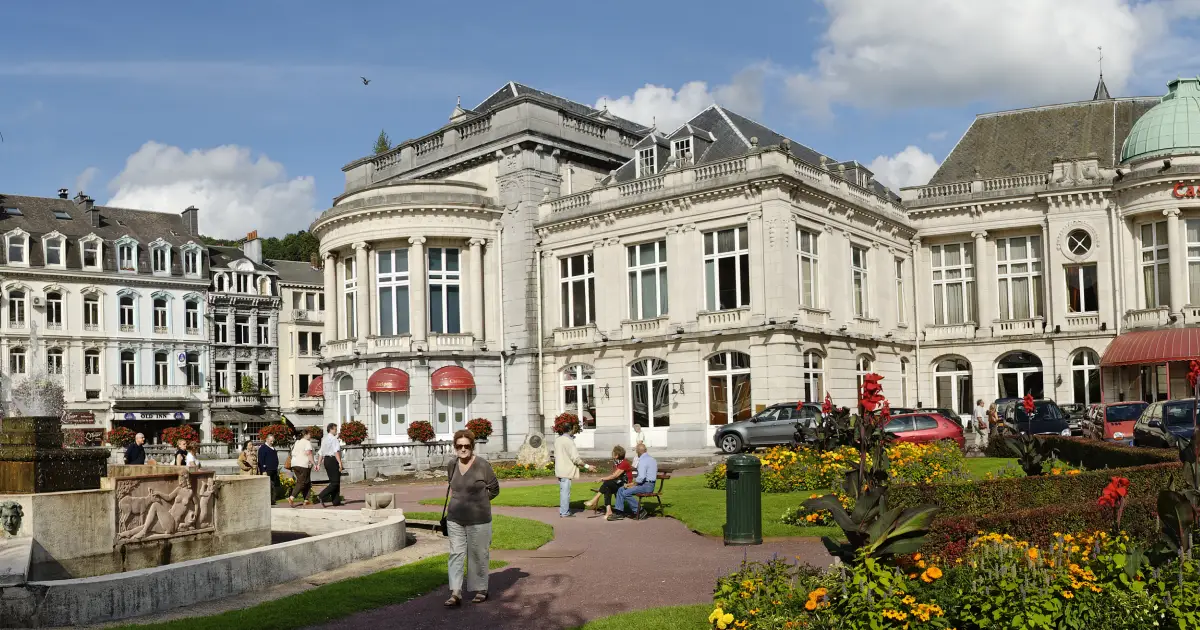
It was in Spa that the world’s first casino – still in operation today – opened its doors. The establishment had been designed to entertain nobles from various parts of Europe.
Spa was already renowned for its thermal baths. The casino complemented the entertainment on offer to the European clientele who frequented the town.
Spa’s historical significance extends beyond casino gaming. According to BAGO, in the early 19th century, the town also hosted the first horse races organised on the European continent.
However, the development of games of chance was not to follow a linear path.
Bans, tolerance and the first legal frameworks
In the early 20th century, the operation of casinos was banned. In some towns, however, it continued to be tolerated for fiscal and historical reasons.
Slot machines installed in pubs were treated differently: they were then regarded as entertainment devices.
Betting followed yet another regulatory path. It was initially covered by the Criminal Code of 12 December 1895. It was not until 1963 that a legal framework was established for pari-mutuel sports betting. Two years later, in 1965, betting on horse racing followed suit.
History thus shows a gradual development of the regulatory framework. Not all forms of gambling were regulated at the same time or in the same way.
This evolution ultimately led to the 1999 Act and the decision to adopt a policy of regulation rather than a blanket ban.
Why Belgium chose to regulate gambling
A turning point came in 1999 with the adoption of the Belgian Gambling Act. This legislation, which remains in force according to BAGO and was modernised in 2024, marks a shift in the approach to the sector.
The reasoning is based on an observation: a total ban on gambling had not led to the disappearance of illegal gambling.
The legislator therefore opted for a different approach. Rather than assuming that the desire to gamble could be eliminated, the policy of channelling gambling activity is based on the principle that this desire will continue to exist. The aim is therefore to direct gamblers towards a legal and regulated market.
In line with this approach, the authorised market also serves as an alternative to the black market. It must operate within an environment where control mechanisms and social protection measures are in place.
For around a quarter of a century, this policy has been one of the cornerstones of the Belgian model presented by BAGO.
However, the emergence of online gambling forced the legislator to adapt this system.
From land-based to digital gambling: a major shift
Recent developments in gambling in Belgium cannot be understood without considering the advent of the internet. With the rapid growth of the internet in the 1990s, online gambling gradually came to play a significant role, eventually becoming, according to BAGO, the most popular form of gambling.
However, this development has created a new challenge for the authorities. In a casino, a betting shop or any other physical venue, the activity takes place within a clearly identifiable environment. On the internet, the boundaries are far less clear-cut.
In particular, illegal websites can operate from foreign jurisdictions. BAGO emphasises that these platforms can thus evade social control mechanisms and avoid paying tax in Belgium.
One question has therefore become central: how can a regulated market be maintained when players can access operators located outside the Belgian legal framework? Belgium’s response is rooted in a policy that predates online gambling itself: channelling.
In 2010, the regulations were adapted to the internet
The Act of 7 May 1999 was amended in 2010 to incorporate games of chance offered on the internet, as well as sports betting and television game shows.
Belgium subsequently established an important principle for digital operators: offering online games of chance also requires a legal presence in the physical Belgian market for the same type of activity.
This rule directly illustrates the logic behind Belgium’s ‘channelling’ approach. Digital activity is not regarded as a completely independent sphere. It is linked to the existing licensing system for physical operations.
The issue is all the more significant given that digitalisation does not merely change the location where players gamble. It also alters the possibilities for monitoring behaviour.
Does digitalisation represent only a risk?
For BAGO, the answer is no.
The organisation acknowledges that digitalisation presents new challenges for licensed operators. However, it believes that digital technologies can also provide new ways of monitoring players’ behaviour and taking preventive action.
By the end of 2023, all BAGO members had therefore signed an agreement providing for the implementation of a prevention policy. The stated aim is to identify problematic gambling behaviour more quickly so that it can also be prevented at an earlier stage. The organisation’s members have committed to funding scientific studies and using artificial intelligence to detect such behaviour at an earlier stage.
BAGO presents this initiative as a voluntary due diligence measure. Through it, the organisation aims to demonstrate to the government and society that it takes its role in regulation seriously.
How far will the evolution of gambling go?
The Belgian sector has constantly adapted to social, economic and technological changes.
In the 16th century, the focus was primarily on lotteries organised for the benefit of churches and guilds. In the 18th century, Spa attracted a clientele of European nobility to its thermal baths and casino. In the 19th and 20th centuries, horse racing, betting, casinos and slot machines gradually found their place within a changing regulatory landscape.
From 1999 onwards, Belgium made ‘channelling’ a central principle: since a total ban had failed to eliminate illegal gambling, the aim became to steer players towards a licensed and regulated offering.
The massive rise of online gambling has complicated this task by making illegal foreign platforms accessible to players. At the same time, it has created new opportunities for monitoring and prevention.
It is in this latter area that BAGO’s members now wish to take action, notably by funding scientific research and utilising technologies that enable the faster identification of problematic behaviour.