




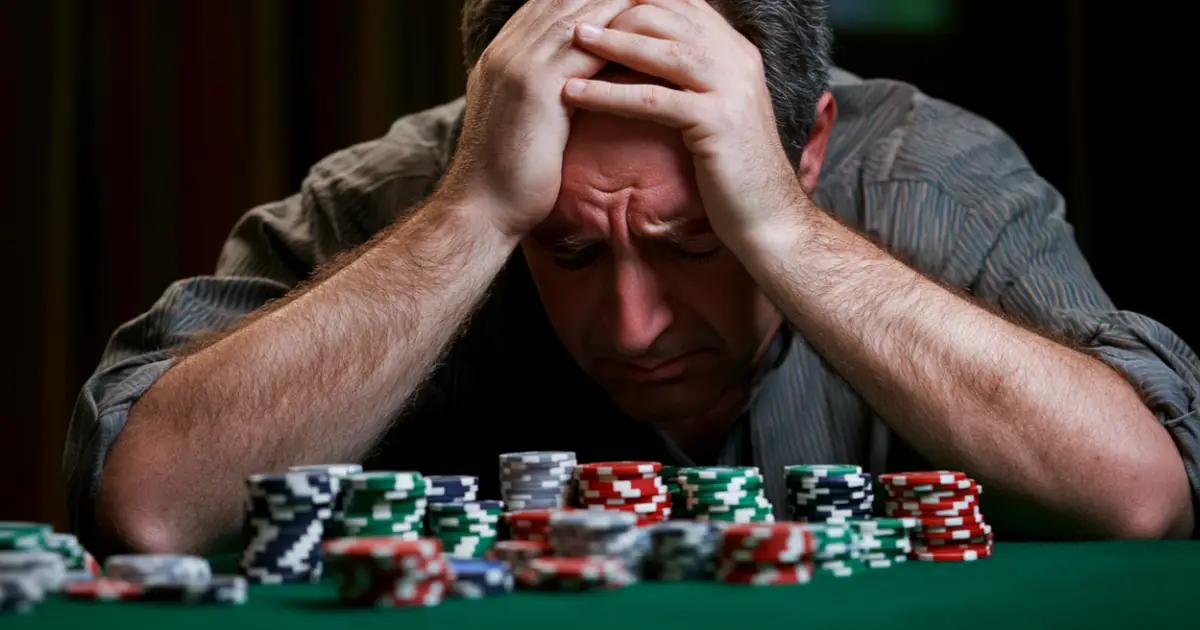
What can you do if your partner or a family member gambles too much?
 •
27 Aug 2026 •
Reading time: 9 minutes
•
27 Aug 2026 •
Reading time: 9 minutes
If someone close to you gambles too much, it rarely affects just the gambler. Financial problems, secrecy, tension and broken promises can put a partner or the whole family under pressure. However, it is not always clear when recreational gambling becomes a problem and what you, as a loved one, can do.
You cannot force someone to change, but you can raise the issue, set clear boundaries and prevent yourself or other family members from being further dragged into the situation. You can also help them find professional support and protective measures.
How can you tell if someone might be gambling too much?
A single large bet or an evening at the casino does not in itself prove a gambling addiction. Look out, in particular, for a recurring pattern and the consequences for finances, relationships, work and well-being.
Possible signs include:
- spending more and more time or money on gambling;
- being secretive about banking matters, gambling accounts or losses incurred;
- regularly borrowing money without a clear explanation;
- trying to win back lost money immediately;
- repeatedly breaking promises to stop or cut down;
- becoming irritable, restless or angry when gambling is not possible;
- neglecting work, studies, family or social relationships;
- only talking about winnings and hiding losses;
- being unable to pay bills, rent or household expenses;
- lying about where money or possessions have gone.
These signs may also have other causes. Therefore, do not make a diagnosis yourself straight away. Our explanation of the signs of online gambling addiction helps you to better recognise the behaviour and its consequences. Read also about how a gambling habit can gradually turn into an addiction.
Choose a quiet moment for the conversation
Do not start the conversation whilst someone is gambling, has just lost a lot of money or is under the influence. Choose a quiet moment when you won’t be disturbed.
Describe what you yourself have seen and experienced. Specific observations usually provoke less resistance than accusations. Say, for example:
“I’m worried because the rent has been paid late twice and you’ve been asking for money a lot in recent weeks. I’d like to understand what’s going on.”
That usually works better than:
“You’re addicted and you’re ruining everything.”
Use ‘I’ messages as much as possible. Point out specific consequences, ask open-ended questions and give the other person space to respond. Don’t try to prove that you’re right. The primary aim is to make the problem something that can be discussed.
What should you avoid doing?
Loved ones often want to resolve the situation quickly. However, well-meaning help can unintentionally prolong the gambling behaviour.
Therefore, do not try to:
- keep paying off gambling debts;
- lend money to recoup losses;
- cover up lies to family, employers or creditors;
- place ‘one big bet’ together to solve financial problems;
- make threats that you cannot or will not carry out;
- constantly checking accounts, phones or locations;
- taking on all responsibility for recovery.
Gambling is not your fault. You can offer support, but you cannot stop gambling on the other person’s behalf. Personal accounts, such as the interview with former gambling addict Rick van Roij, show why honesty and breaking the silence can be so important.
Set clear boundaries
A boundary is not a punishment. It is a clear agreement about what you will and will not accept, and what you will do if the agreement is not honoured.
Examples include:
- “I will no longer lend money for gambling or to pay off gambling debts.”
- “The household money must remain in a separate account.”
- “I don’t lie to family or creditors to hide my gambling.”
- “If money goes missing from the joint account again, I’ll contact the bank and seek financial advice.”
- “I want to help them seek support, but I won’t take full responsibility for their recovery.”
Set boundaries that are necessary and realistic. Also calmly explain the consequences if they are crossed. A boundary only works if you are prepared to actually follow through on those consequences.
Protect the household budget and joint assets
When gambling affects the family’s finances, a quick overview is needed. Work together to identify:
- which fixed costs are due for payment soon;
- which bank accounts, credit cards and loans exist;
- whether there are any overdue payments or unknown debts;
- which automatic payments are being made to gambling operators;
- whether savings or joint assets are at risk.
First, ensure that rent or mortgage, energy bills, food, insurance and children’s expenses are covered. Discuss with the bank what options are available for joint accounts and payment methods. Never open a private account without permission and do not use the other person’s personal codes.
If you have problematic debts, seek advice from the OCMW, CAW, a recognised debt counsellor or a legal adviser. Do not simply take on all the debts and do not sign up for a new loan without independent advice.
Work together to draw up a concrete plan to stop or recover
Once the person recognises that their gambling is causing problems, turn good intentions into manageable steps. Consider:
- making a list of all gambling accounts and outstanding withdrawals;
- contacting their GP or specialist support services;
- requesting self-exclusion or a temporary suspension of gambling accounts;
- blocking access to gambling apps and websites;
- removing payment methods from gambling accounts;
- drawing up an overview of debts and fixed costs;
- involving one trusted person in monitoring progress;
- agreeing on what will happen in the event of a relapse.
When it comes to legal gambling, lower financial limits can help. Find out how the Belgian deposit limits for online casinos work. General agreements on budget, time and breaks are set out in our tips for responsible gambling.
In cases of clear control issues, a lower limit alone is often insufficient. Professional support and full exclusion may then be more appropriate.
Discuss voluntary exclusion via EPIS
EPIS is the Belgian self-exclusion scheme for regulated gambling. Anyone included on the list will no longer be granted access to participating legal casinos, slot machine halls and betting shops, both online and in person.
First, ask the person if they are willing to be excluded voluntarily. Submitting the application themselves usually leads to greater involvement in their recovery. You can read about how the system works in our explanation of the Belgian EPIS list.
In Belgium, a concerned third party, such as a partner or family member, can also apply for an access ban on behalf of someone else. The application is assessed; therefore, a person is not automatically excluded simply because a family member submits the form. The VAD explains how, as a close relative, you can apply for an access ban on gambling.
EPIS applies only within the regulated Belgian gambling sector. Illegal websites do not check the register. You should therefore also read why the difference between legal and illegal gambling sites is particularly important for vulnerable players.
Where can you find help as a close relative?
You do not have to wait until the person who is gambling wants help themselves. Partners, parents, children, friends and other family members can also receive advice and support.
A first step could be:
- your own GP;
- your local CAW or OCMW;
- a Mental Health Centre;
- a psychologist or therapist with experience in addiction issues;
- De Druglijn by phone, chat or email;
- Gokhulp for information and guidance on gambling problems.
The information page for partners of people who gamble excessively provides practical advice on conversations, financial protection, children and setting boundaries. The Druglijn helpline can be reached on 078 15 10 20 from Monday to Friday between 10.00 and 20.00. You can contact them anonymously with questions about gambling and support in your local area.
Seeking help for yourself is not a betrayal of your partner or family member. Prolonged stress, uncertainty and financial anxiety can also affect your health.
What if the person denies there is a problem?
You don’t need to convince anyone before you protect yourself and your family. Calmly reiterate the facts you’ve observed, how they’re affecting you and the boundaries you’re setting.
Don’t get bogged down in endless discussions about whether someone is ‘really addicted’. You’re already justified in taking action if money goes missing, promises are broken, children are suffering from the tension, or you no longer feel safe at home.
If there is theft, threats, physical violence or financial control, safety comes first. Seek support from someone you trust and, if necessary, contact the police, the CAW or professional help. In the event of immediate danger, call 112.
What if there are children in the family?
Children often sense tension, even when adults try to hide the problem. Give them a simple explanation appropriate to their age. Make it clear that the problem is not their fault and that they do not have to solve it.
Do not use children as messengers, supervisors or confidants. Ensure that their daily lives, school, diet and leisure time continue as normal as far as possible. Seek professional support if the home situation becomes uncertain or unsafe for a prolonged period.
Always take statements about suicide seriously
Gambling problems can be accompanied by shame, debt, despair and suicidal thoughts. Always take statements such as ‘I don’t want to go on’ or ‘you’d be better off without me’ seriously. Ask directly whether the person is thinking about suicide and, in the event of immediate danger, do not leave them alone.
In an acute emergency, call 112 or the on-call GP via 1733. For a free and anonymous conversation, the Suicide Helpline (1813) is available by telephone 24 hours a day. As a concerned loved one, you can also contact them.
Can I force someone to stop gambling?
You cannot usually force someone to work towards recovery of their own accord. However, you can set boundaries, protect joint finances, seek professional help and, under certain conditions, submit an EPIS application as an interested third party.
Do I have to pay my partner’s gambling debts?
No. Do not automatically pay off debts and do not borrow money to recoup losses. First, get a full picture of the financial situation and seek independent advice from a debt counsellor, the OCMW, the CAW or a legal adviser.
Is it worth taking away bank cards?
Simply removing payment methods does not solve the underlying problems and may lead to secrecy or the use of alternative payment channels. Protect joint funds through clear agreements and discuss with the bank which measures are legally and practically feasible.
Does EPIS also work with illegal casinos?
No. EPIS is used by licensed Belgian operators. Illegal gambling sites are not affiliated with the system and may still allow excluded players to access their services.
Can I seek help myself if my partner does not want to stop?
Yes. Gokhulp, De Druglijn, your GP, the CAW and specialist support workers also provide support to partners and family members. You do not have to wait until the gambler asks for help themselves.
Is a relapse the same as failing?
No. A relapse can occur during recovery. Discuss what led up to it, reinstate the agreed protective measures and contact the support worker again. A relapse is a reason to tighten up the plan, not to hide the consequences.