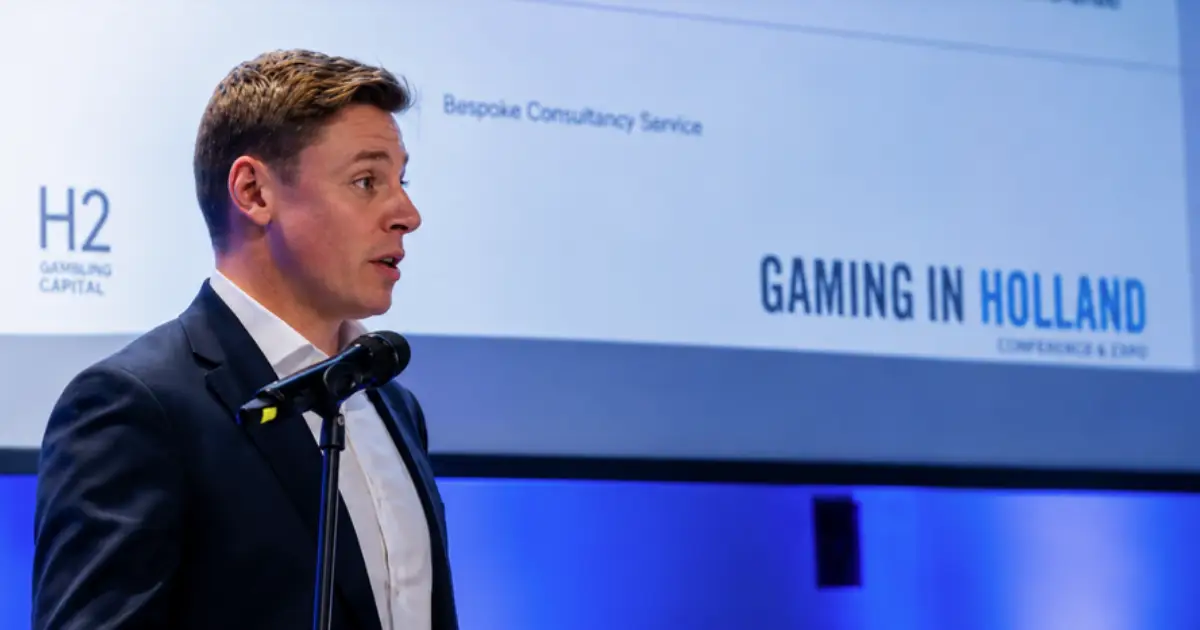



Jean-Christophe Choffray: Gaming1 wants to reinvent the player experience
In an interview with EGR Global, Jean-Christophe Choffray, head of product vision at Belgian group Gaming1, outlines their strategy for the years ahead.
Anyone offering gambling in Belgium is entering a tightly regulated sector. Much attention goes to licences and inspections by the Gaming Commission. But at least as important is the tax side of things. Gaming and betting taxes are not an afterthought.
Since February 2026 in France, an experimental framework has been overseeing games based on monetisable digital objects (JONUM), a fast-growing sector at the crossroads of online gaming, blockchain and virtual economies.
In the Netherlands, Polymarket is now under fire. But Belgium was earlier. Since 30 January 2025, the platform is officially listed as an illegal gambling site here.
The picture is worrying. In Scandinavia, the illegal online gambling market is growing despite strict regulation. Belgian figures show a similar trend.
A regulatory investigation by the MGA has revealed shortcomings in the systems designed to protect vulnerable gamblers. Behind the technological promises, reality still reveals shortcomings.
It sounds like a growth story. But behind the figures lies a shadow side. A subsidiary of the French lottery operator FDJ obtained a license on the Comorian island of Anjouan, a place long known as a haven for controversial online casinos.
The announcement of Stake’s arrival on the Danish market was presented by certain specialized media as a major breakthrough in one of Europe’s strictest regulatory environments. However, a careful reading of the available facts suggests that this story needs to be qualified.
The European online gambling market is experiencing an explosion in illegal supply. Public authorities are now looking for a new strategy: no longer going after sites one by one, but attacking the ecosystem that enables them to exist.
Faced with the rapid expansion of online gambling, the issue of player protection has become a central public policy concern. In Belgium, BAGO’s operators defend a model based on the duty of care.
It’s a tough rap. The Kansspelautoriteit of the Netherlands is intervening and imposing a penalty payment on Polymarket of up to €840,000. The gambling watchdog wants the platform to stop offering betting in the Netherlands with immediate effect.
It’s scary. Those searching on Trustpilot for casinos with or without EPIS do not always get what they expect. Gambling Club took a closer look at the platform and came across a pattern that raises questions about protection and supervision.
A recent study into gambling practices among 15-17 year-olds reveals a significant increase in underage gambling in France, despite the fact that it is legally prohibited. The data show a shift in use towards circuits that are difficult to control.
In Brussels, a dispute has been raging for several years between gambling operators over a regional tax applied to bingo machines. Recently rekindled by a court ruling, the case highlights suspicions of non-payment, controls deemed insufficient and a loss of revenue estimated at several million euros for public finances.
The online gaming industry is currently at the center of an unexpected debate: the ethical limits of marketing and the themes used in certain digital slot machines. Between deliberate provocation, visibility strategies, and questions about social responsibility, a new generation of games is raising issues that go far beyond simple entertainment.
The judicial investigation into former European Commissioner Didier Reynders has taken a new turn. The Brussels courts now suspect two close associates, his right-hand man Jean-Claude Fontinoy and antique dealer Olivier Theunissen, of being involved in a possible money laundering scheme involving more than €1 million.