




Record number of Belgians voluntarily exclude themselves from gambling
 •
1 Oct 2026 •
Reading time: 6 minutes
•
1 Oct 2026 •
Reading time: 6 minutes
A record 66,998 people were registered in EPIS at their own request at the end of 2025. Over the course of one year, the number of voluntarily excluded players increased by a net 10,540. People in their twenties and thirties in particular are taking steps to protect themselves from gambling.
Number of voluntarily excluded players rises by almost 19%
The number of people voluntarily excluding themselves from gambling in Belgium has never been higher. At the end of 2025, the Excluded Persons Information System, better known as EPIS, included exactly 66,998 voluntarily excluded individuals. A year earlier, that figure stood at 56,458.
This represents an increase of 10,540 people, or almost 19% in a single year. Since 2018, the number has more than doubled. At that time, 32,468 people were registered in the system at their own request.
EPIS is the central database used to control access to licensed gambling. Anyone who voluntarily registers is no longer allowed to enter Belgian casinos, gaming arcades and the relevant betting shops. The exclusion also applies to licensed gambling websites. Our guide to how the Belgian EPIS list works explains which other groups can be excluded automatically or following an application.
A voluntary EPIS registration therefore goes much further than simply closing a single player account. Closing an account generally only applies to the operator concerned, whereas EPIS covers the entire regulated Belgian gambling market. Gambling Club previously explained the difference between closing a casino account, taking a gambling break and EPIS.
More than 16,000 applications in one year
During 2025, 16,358 applications for voluntary exclusion were processed. This was also a record. In 2024, there were 12,509 applications, compared with 10,506 in 2023. In just two years, the annual number of applications therefore rose by more than 55%.
Those 16,358 applications should not be interpreted as 16,358 different newly excluded players. One person can submit several applications in the same year. The difference between the number of applications and the net growth of the list also arises because people can later request that their exclusion be lifted.
The sharp increase does not necessarily mean that the number of people with a gambling addiction has risen at the same rate. It may also indicate greater awareness of EPIS and a lower threshold for seeking protection. Self-exclusion is increasingly presented as a practical precautionary measure rather than solely as a last resort for people with serious gambling problems.
Itsme lowers the barrier
Of the 16,358 applications submitted in 2025, 12,429 were made via itsme. This corresponds to almost 76% of all requests. The option to complete the procedure digitally was introduced at the end of 2021 and makes it easier to request an access ban without complicated paperwork.
The figures show how quickly this digital application method has become established. In 2024, 9,937 applications were already submitted via itsme. The absolute number continued to rise in 2025, although its share fell slightly because more requests were also submitted through other channels.
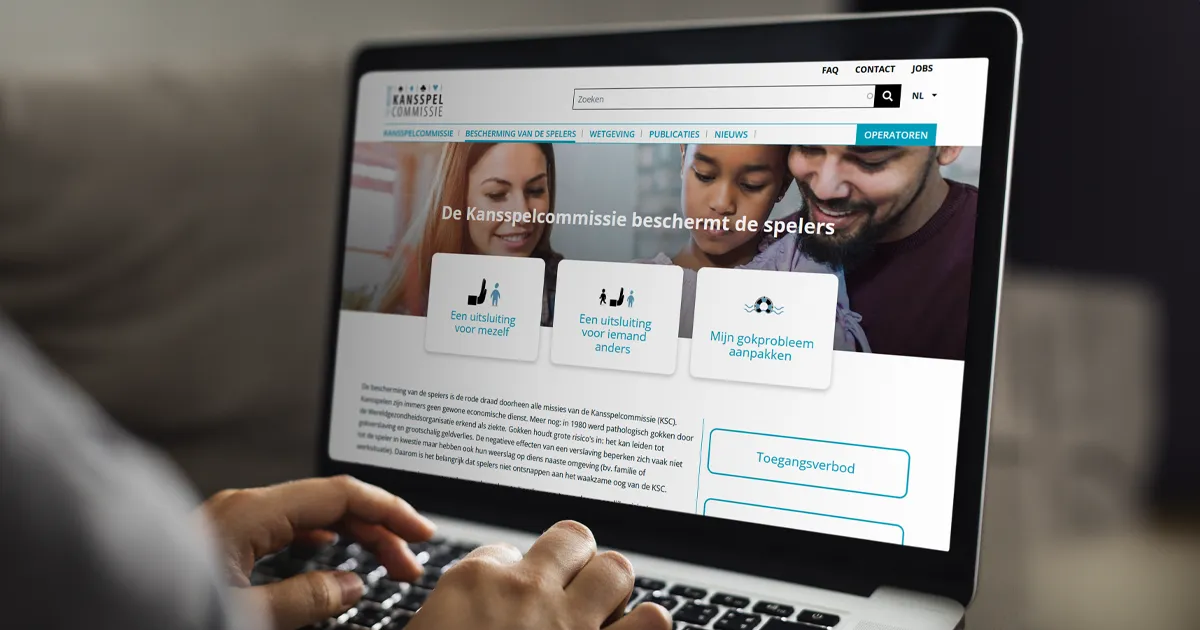
An application can be made through the official procedure for a voluntary access ban. Once a person is registered, licensed gambling companies must deny them access when they try to log in or visit a physical gambling venue.
People in their twenties and thirties are the most likely to seek protection
The age distribution is striking. Of all applications submitted in 2025, 5,379 came from people aged between 21 and 29. The 30-to-39 age group followed almost immediately with 5,331 applications.
Together, people under the age of 40 accounted for 10,797 applications, or around 66% of the total. Among those aged 40 to 49, there were 3,182 requests. A further 1,582 applications were submitted by people in their fifties and 797 by people aged 60 or over. In the 18-to-20 age category, there were 87 applications.
The fact that people in their twenties and thirties are particularly likely to turn to EPIS is relevant because online gambling is permanently accessible. A casino or betting platform is available on the same smartphone as a banking app, social media and messages from friends. As a result, gambling can easily become part of everyday digital behaviour.
At the same time, technology can also play a role in early protection. Research is being conducted into whether AI can identify problematic gambling behaviour before the harm becomes more serious. Self-exclusion, however, remains a deliberate step taken by the player and is not a substitute for support when gambling causes financial, psychological or relationship problems.
Trusted contacts are involved much more often
Since July 2023, people have been able to name a trusted contact when submitting their application. This person is informed when the exclusion is registered and when a request is later made to lift it.
In 2025, a trusted contact was designated in 6,394 applications. That represents more than 39% of all requests. In 2024, this happened in only 2,093 applications. Use of this option therefore more than tripled in a single year.
A trusted contact can provide additional support and social accountability at times when an excluded player wants to gamble again. This is important because problematic gambling does not affect only the player. Partners, parents, children and friends are often confronted with debt, secrecy and broken promises. Anyone who is concerned can read more about what to do when a family member gambles too much.
In 2025, third parties also submitted requests to have 189 people excluded. Of these requests, 82 were approved and 107 were rejected. The number of third-party applications fell compared with 2024. According to the annual report, the option of voluntarily involving a trusted contact may partly explain this decline.
Exclusion can only be lifted after three months
A voluntary exclusion does not necessarily last for life. In 2025, 5,519 applications were submitted to have an existing exclusion lifted. This was slightly higher than the 5,326 requests recorded a year earlier.
Access is not restored immediately after such a request. For a voluntary exclusion, a three-month waiting period applies before the lifting of the exclusion takes effect. This cooling-off period is intended to prevent someone from immediately undoing their protection during an impulsive moment.
The difference between the number of exclusion applications and the eventual net increase in the number of excluded individuals therefore needs to be interpreted carefully. People can submit multiple requests, while others leave the system again after the waiting period.
More than 715,000 gambling attempts blocked
EPIS is not merely an administrative list. In 2025, the system blocked 715,373 access attempts by excluded individuals. By far the largest share took place online: 690,074 refusals, or more than 96% of the total.
In addition, 15,338 attempts were blocked in gaming arcades, 7,296 in betting shops and 2,665 in casinos. These figures do not represent an equal number of individual players. The same excluded person may try to gain access multiple times.
The figures do show that the protection is activated mainly online. At the same time, EPIS has an important limitation: only licensed operators are connected to the system. Illegal foreign websites can ignore Belgian controls. Additional blocking software such as BetBlocker for smartphones can therefore provide an extra barrier, although it cannot offer an absolute guarantee either.
The record is both positive and concerning
The fact that almost 67,000 people are voluntarily stepping away from gambling shows that more and more players are willing to protect themselves. The simple digital application process and the possibility of involving a trusted contact make this step more accessible.
At the same time, the record should not be seen solely as a success. Behind every application may be a period of losses, stress or loss of control. The rapid growth, particularly among young adults, shows how significant the need for protection has become.
Anyone who has doubts about their own gambling behaviour can find anonymous information, a self-test and advice from De Druglijn. EPIS can technically block access to gambling, but in cases of problematic gambling, human support, financial guidance and professional help also remain important.